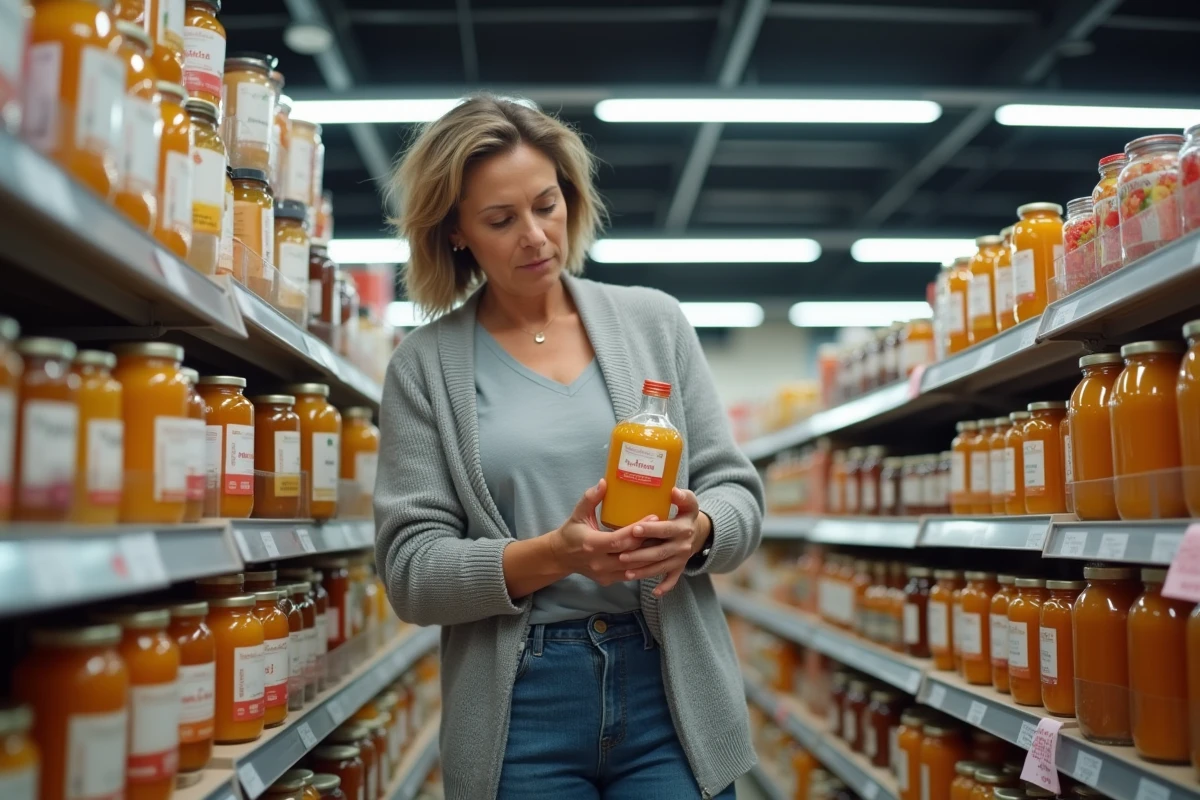
The 90° fruit alcohol sold at Leclerc is the subject of ongoing discussions on consumer forums and social media. In 2026, the product crystallizes two parallel frustrations: its availability has become random depending on the stores, and its pricing no longer aligns with the low-price image associated with the brand. Assessing what buyers report helps to understand the current state of this niche market in large retail.
Availability of 90° fruit alcohol at Leclerc: a changing aisle
The first obstacle consumers encounter in 2026 is not the price, but simply finding the product. Several E.Leclerc hypermarkets and drives have removed 90° fruit alcohol from self-service. Instead, the aisles offer alcohols with an alcohol content between 40° and 45°, or flavored preparations for fruit in alcohol.
This silent substitution fuels a “treasure hunt” sentiment among homemade preserve enthusiasts. In discussion groups, the product is described as “difficult to find,” or even “reserved for a few stores” depending on the geographical area. There has been no official communication from the brand explaining these localized withdrawals.
Field reports vary on this point: some drives still list the product online while the corresponding physical store no longer offers it. This inconsistency between the digital channel and the aisle complicates the task for consumers looking to compare the price of Leclerc fruit alcohol before making a trip.
Price of Leclerc fruit alcohol compared to other brands
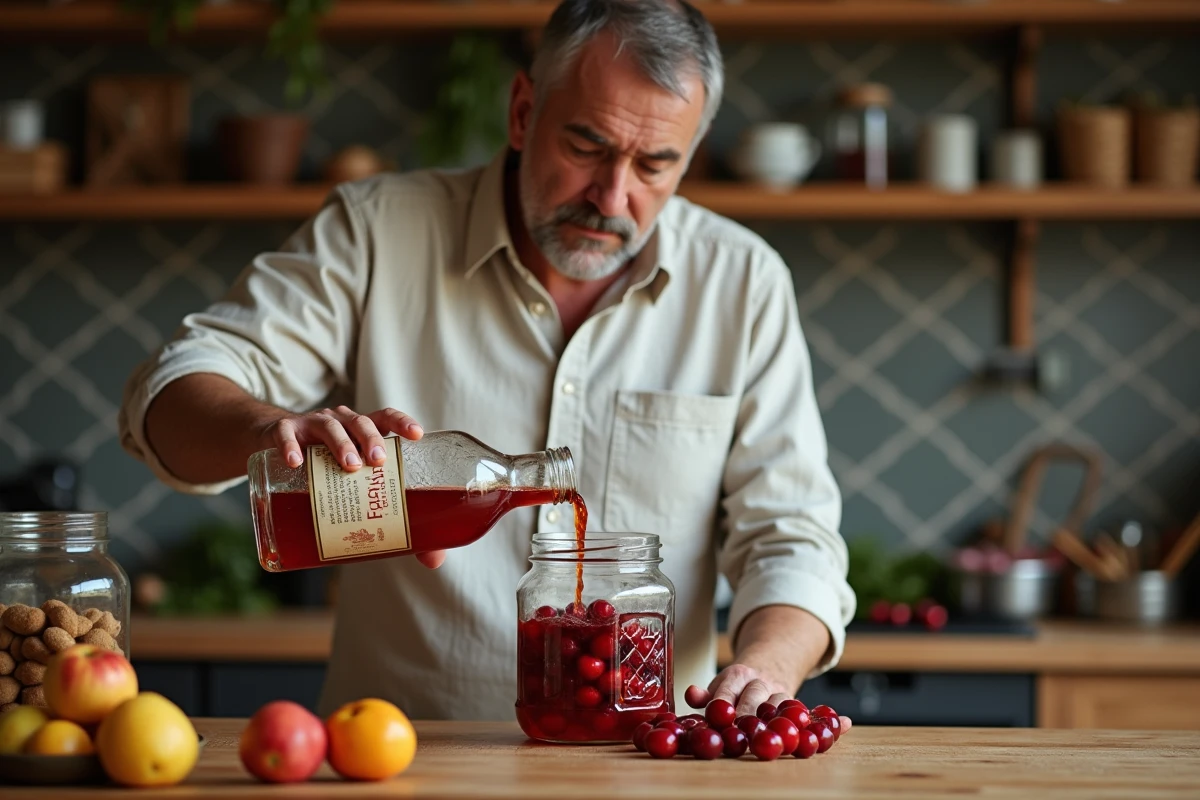
When the product is available, consumers report a price level comparable to other major brands (Intermarché, Carrefour, Lidl). Any price difference, if it exists, is not enough to create a perceived advantage for regular buyers.
This observation contrasts with Leclerc’s historical positioning. The brand, which claims to be “first on prices” and relaunched an aggressive price war strategy in 2025, does not seem to apply this logic to this specific niche. Michel-Édouard Leclerc mentioned at least “1 to 1.5% price increase” in 2026 for food in general, but this general forecast does not provide information on the fruit alcohol category in particular.
The available data do not allow for a conclusion on a stable exact price: the price varies from one store to another, and occasional promotions (E.Leclerc tickets, weekly operations) blur the reading of the reference price.
What consumers are really comparing
Online discussions show that buyers do not only compare the face value of the bottle. Three criteria consistently emerge:
- The actual alcohol content of the product: a bottle at 90° does not serve the same purpose as a preparation at 40°, even if the price per liter seems close.
- The price relative to the alcohol content: informed consumers calculate the cost per degree-liter, which significantly disadvantages flavored preparations.
- The regular availability: a low price has no value if the product is only available three months a year or only by order.
Flavored preparations for fruit: the trap of the price per liter
The most documented frustration in 2026 concerns substitute products. Flavored fruit preparations, often highlighted in the aisles instead of the classic 90°, display a higher price per liter for a significantly lower alcohol content.
For a consumer preparing their cherries in brandy or fruits in alcoholic syrup, this difference affects the final result. An alcohol at 40° does not preserve fruits in the same way as an alcohol at 90°, and the amount needed to achieve an equivalent result increases the actual cost of the recipe.
Consumer feedback also points to the composition of these preparations. The added flavors (vanilla, cinnamon, citrus) do not suit all traditional recipes. A fan of “natural” fruit alcohol finds themselves without a solution in their local Leclerc aisle.
Fruit alcohol in large retail: a segment under regulatory tension
The scarcity of the product on the shelves is not solely a commercial choice. The sale of very high-proof alcohol in self-service is subject to increasing regulatory scrutiny in France. Large retail brands are adapting their offerings based on constraints that are not always made public.
Leclerc, like Carrefour or Intermarché, balances the demand from a niche clientele (homemade preserves, artisanal liqueurs) with the risks associated with stocking a 90° product. The result, in 2026, is a variable assortment from one store to another, with no visible national coherence.
Organic range and alternatives in the beverage aisle
Some Leclerc stores compensate for the withdrawal of the 90° by offering an expanded range of organic fruit alcohols or high-quality brandies. These references, positioned higher in the range, do not meet the same need. Their price is significantly higher, and their alcohol content often remains below 50°.
- Organic fruit brandies (pear, plum, mirabelle) are aimed at tasting, not preservation.
- “Special pastry” alcohols at 45° are suitable for cakes but not for fruit jars.
- Flavored preparations target occasional festive use, not preservation cooking.
The consumer looking for neutral 90° alcohol for their summer fruit preserves faces a reformatted range that no longer corresponds to their needs.
The state of the market in 2026 reflects a gap between the expectations of a loyal clientele for a simple product and the assortment strategy of large brands. Leclerc is not exempt from this trend. For consumers who are keen on 90° fruit alcohol, the solution increasingly involves checking availability online, store by store, before any trip.