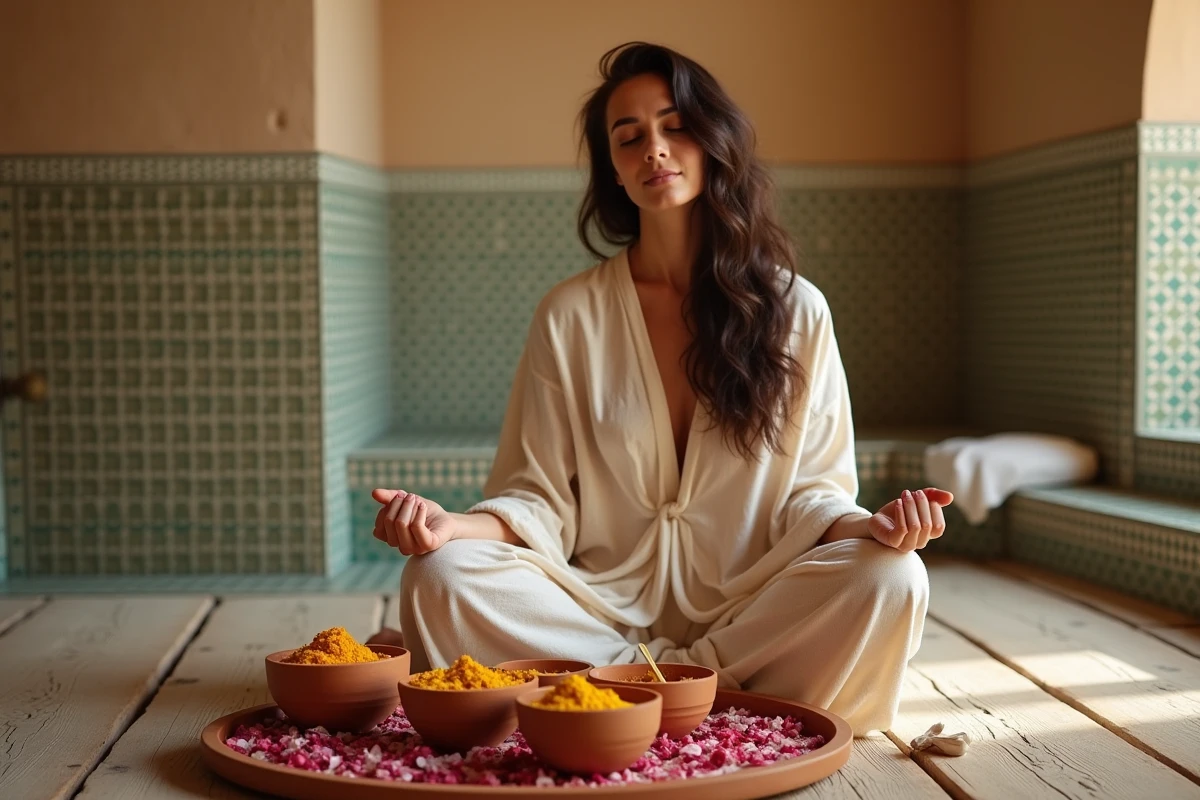
An ancestral beauty ritual refers to a sequence of gestures and ingredients passed down through generations within a given culture, with the primary goal of caring for the skin or hair using local resources. These practices rely on raw materials (clays, vegetable oils, floral waters) and a relationship with time that contemporary cosmetics rediscover under the term “slow beauty.”
Before reproducing these gestures, it is important to clarify: the origin and quality of each ingredient matter as much as the gesture itself. A handmade shea butter from Burkina Faso and an industrial refined butter do not produce the same effect on the skin.
Vegetable oils in beauty rituals: how composition changes things
Argan oil, sesame oil, castor oil: these fatty substances appear in the majority of care traditions, from North Africa to India. Their common feature is a richness in unsaturated fatty acids that strengthens the skin barrier.
The difference between cold-pressed oil and solvent-extracted oil is rarely explained in beauty content. Cold pressing preserves minor compounds (polyphenols, tocopherols) that contribute to the skin’s antioxidant protection. A cold-pressed oil retains its protective compounds, whereas industrial refining almost completely eliminates them.
In Ayurvedic tradition, the application of warmed sesame oil on the body (abhyanga) precedes the bath. The massage follows precise paths, from the extremities to the center, for several minutes. This daily gesture aims at both joint flexibility and skin radiance. To delve deeper into these types of practices, Blog Beauté’s tips detail several protocols suitable for daily use.
Clays and traditional scrubs: ghassoul, black soap, and rhassoul
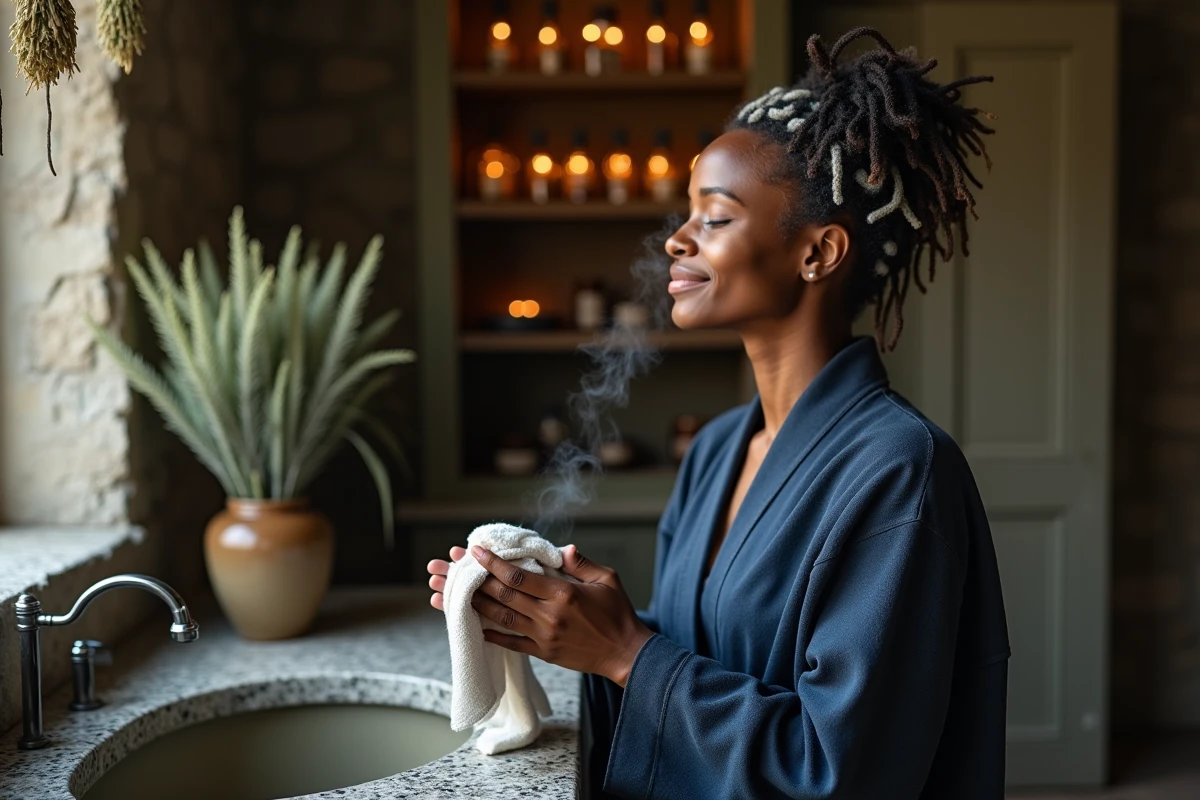
The Moroccan hammam relies on a precise sequence: steam, then application of black soap made from olive oil, then scrubbing with a kessa glove, then a ghassoul clay mask. Each step prepares for the next.
Ghassoul (or rhassoul) is a clay extracted from the Middle Atlas region. Its uniqueness lies in its absorbing power without marked drying effects, distinguishing it from more aggressive European green clays for sensitive skin.
What makes the hammam sequence effective
Steam dilates the pores and softens dead cells. The black soap, applied in a thick layer and then left to sit, dissolves oxidized sebum on the surface. The kessa glove mechanically exfoliates without micro-scratches, provided a fabric glove is used instead of an abrasive synthetic one.
- Traditional black soap contains only olive oil and crushed black olives, without synthetic surfactants.
- Ghassoul is mixed with rose water or lukewarm water to form a creamy paste, never with hot water which alters its properties.
- The kessa glove is used in long, even strokes, never in quick circular rubs that irritate the skin.
This complete sequence requires no modern cosmetic products. It works with three ingredients and one textile accessory.
Floral waters and hydrosols: the most underestimated beauty gesture
Rose water, orange blossom water, lavender hydrosol: these by-products of essential oil distillation served as skin tonics long before the advent of industrial lotions. In Persian tradition, rose water accompanied every moment of personal care.
A true hydrosol comes from steam distillation of an aromatic plant. It is not water mixed with a few drops of essential oil, contrary to what some commercial products offer.
The hydrosol contains the water-soluble aromatic molecules of the plant, in low concentration but sufficient for daily use on the face. Its pH is generally close to that of the skin, making it a logical complement after cleansing.
Choosing a quality hydrosol
The label “floral water” does not guarantee anything if the INCI list reveals synthetic preservatives or added alcohol. A pure hydrosol contains only one ingredient: the distillate of the named plant.
Ancestral beauty and current cosmetics: the question of appropriation
Reproducing a beauty ritual from another culture raises questions that beauty content rarely addresses. The authenticity of ingredient sourcing has become a topic scrutinized by consumers and regulators.
The European cosmetic regulation strictly governs the claims “natural” and “clean.” Brands that claim an ancestral heritage must justify the traceability of their raw materials and the veracity of their claims.
- A product labeled “traditional argan oil” may contain a minimal fraction of argan drowned in silicones.
- The mention “inspired by the hammam” does not imply any obligation to use Moroccan ingredients.
- Women’s cooperatives producing argan or ghassoul in Morocco do not always benefit from the added value captured by Western brands.
This gap between marketing narratives and the reality of the supply chain deserves consideration when choosing products. Prioritizing short supply chains or brands that name their suppliers remains the most coherent approach.
The most sustainable beauty ritual is one that uses few, well-sourced ingredients, rather than an accumulation of “inspired by” products. Three mastered gestures with traceable raw materials will always replace a twelve-step routine, half of which is storytelling.