Smart TVs accumulate applications over the months, between those installed out of curiosity and those preloaded by the manufacturer. Uninstalling an application on a Smart TV seems simple in theory, but the obstacles vary depending on the operating system, model, and type of application. This guide outlines the facts, known limitations, and points of caution often absent from traditional tutorials.
Uninstalling an application on Smart TV: what the system doesn’t always allow you to do
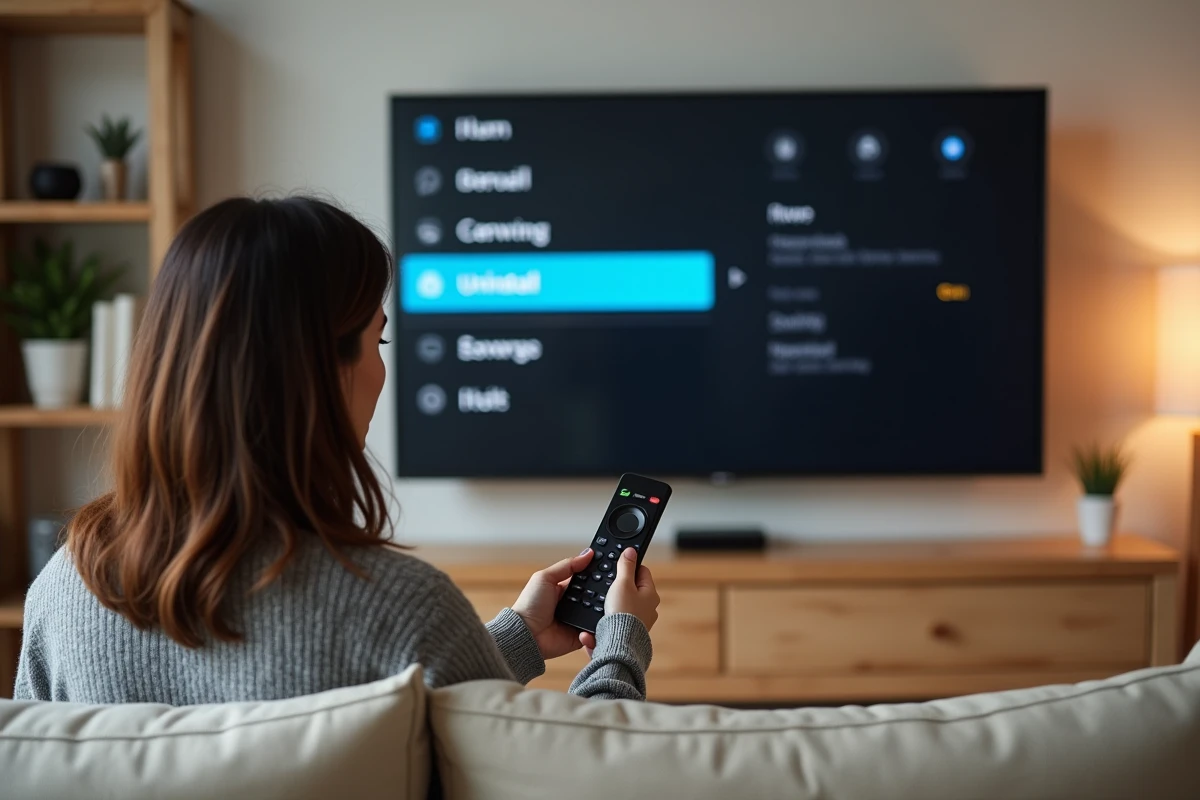
On most connected TVs, the uninstallation procedure goes through the applications menu or system settings. Access the home screen via the remote control, open the Applications section, and then select the one to be removed.
The problem begins with preinstalled applications. Samsung, LG, and other manufacturers integrate so-called “system” apps that resist deletion. On a Samsung TV, for example, applications like Samsung TV Plus cannot be deleted but only removed from the home screen. The distinction is significant: removing an app from the home screen does not free up storage space.
For detailed procedures brand by brand, you can consult the Google Plus site which describes the specific steps for each interface.
On TVs equipped with Google TV or Android TV (Sony, TCL, Philips), the flexibility is greater. Since Android 14, advanced users can use ADB (Android Debug Bridge) to uninstall bloatware that the standard interface does not allow to remove. This manipulation requires a computer connected to the same network and minimal technical knowledge.
Bugs and malfunctions after removing apps on Smart TV
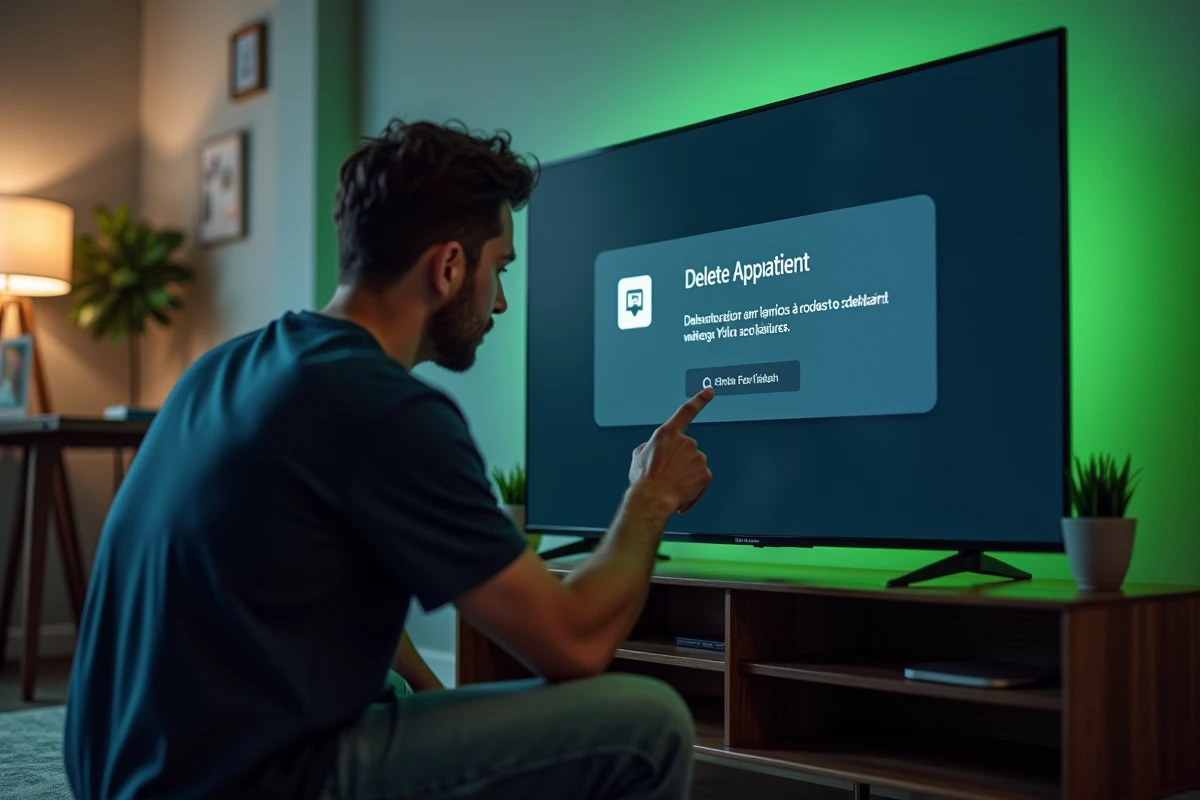
Removing an application is not just about freeing up space. Field reports indicate a rising trend of Smart Hub malfunctions after removing system apps on Samsung models from 2024-2025. Reported symptoms include unexpected restarts and slow navigation in menus.
A thread from the Samsung Community forum, analyzed in April 2026 with over 500 responses since January, documents these issues. The solution identified by the community involves a “partial reset” that can be performed via the Samsung Members app, without a complete reset of the TV.
Before uninstalling an application, three checks are necessary:
- Check if the application is linked to a system function (the electronic guide or the update service, for example, should never be deleted)
- Consult the remaining storage space in the system settings to assess whether removal is truly necessary
- First, test clearing the app’s cache, accessible in the settings menu of each app, which often suffices to resolve slow performance issues
Clearing an application’s cache resolves most performance problems without risking destabilizing the system. This is the preferred action before any uninstallation.
Automatic storage management: what manufacturers offer in 2025-2026
Samsung introduced with Tizen 8.0 an automatic archiving function for rarely used applications. The system detects inactive apps and archives them to free up space, without the user needing to perform a manual uninstallation. The application remains visible in the list but its footprint on storage is reduced. This approach was designed to address recurring complaints about saturated storage.
However, this function only concerns third-party applications. Preinstalled apps by Samsung remain protected and occupy a fixed space on the TV. The automatic archiving of Tizen 8.0 does not replace a complete uninstallation for those who wish to recover all occupied space.
On Google TV, the system also offers cleaning suggestions when storage becomes critical. The Settings menu, then Storage, displays the list of applications sorted by size, making it easier to identify those that consume the most memory.
Reselling used Smart TVs: uninstalling apps and personal data
The question of uninstallation takes on a different dimension when it comes to reselling or giving away a TV. Streaming applications (Netflix, Disney+, Prime Video) retain login credentials, viewing histories, and sometimes payment information.
Uninstalling an application does not guarantee the removal of all associated data. Residual files may remain in the TV’s memory. The only reliable method to protect personal information remains a factory reset, accessible in the general settings of each brand.
The Digital Services Act, updated on March 10, 2026, strengthens manufacturers’ obligations regarding transparency on the processing of user data within preinstalled applications. This European regulatory framework raises the question of the responsibility of the second-hand seller: transferring a TV with apps still connected to their accounts exposes them to a real risk of unauthorized access.
Before any resale, a rigorous procedure is necessary:
- Log out individually from each streaming application and each online service
- Unlink the TV from your Google, Samsung, or LG account in the account settings
- Perform a complete factory reset to erase all data, installed applications, and preferences
- Check after the reset that the home screen returns to its original configuration
A properly reset TV, free of any personal accounts, retains its value better for resale. Second-hand buyers are increasingly attentive to this point, and a TV delivered with third-party accounts still active becomes a negative bargaining chip during negotiations. Taking the time to clean your Smart TV properly before parting with it protects both the seller and the buyer.