Nocibé is among the largest cosmetic distribution networks in France. The question of its stance on animal testing frequently arises among consumers who wish to purchase without endorsing animal experimentation. The issue seems straightforward at first glance, as European regulations have prohibited these tests for several years. However, the reality is more fragmented, with obligations under the REACH regulation, private labels, and gray areas related to international suppliers.
The REACH regulation, a blind spot for cruelty-free in Europe
The European cosmetic regulation (EC) No. 1223/2009 has banned animal testing for finished products since 2004 and for most ingredients since 2009. The marketing of cosmetics tested on animals has been prohibited since 2013. Based on this, any product sold in France should be considered as not tested.
The problem arises from the REACH regulation, which governs the registration and safety of chemical substances across all industries. REACH can still impose animal testing for certain ingredients when they are also used in sectors other than cosmetics. Therefore, the same component found in a facial care product and in an industrial product may be subject to animal testing required by the ECHA, the European Chemicals Agency.
This regulatory contradiction affects all European brands, including Nocibé. A brand can strictly adhere to the cosmetic regulation while being subject to REACH obligations for some of its ingredients. To delve deeper into Nocibé’s cruelty-free policy, it’s essential to keep this legal framework in mind.
Nocibé and Leaping Bunny audits: what the certification covers
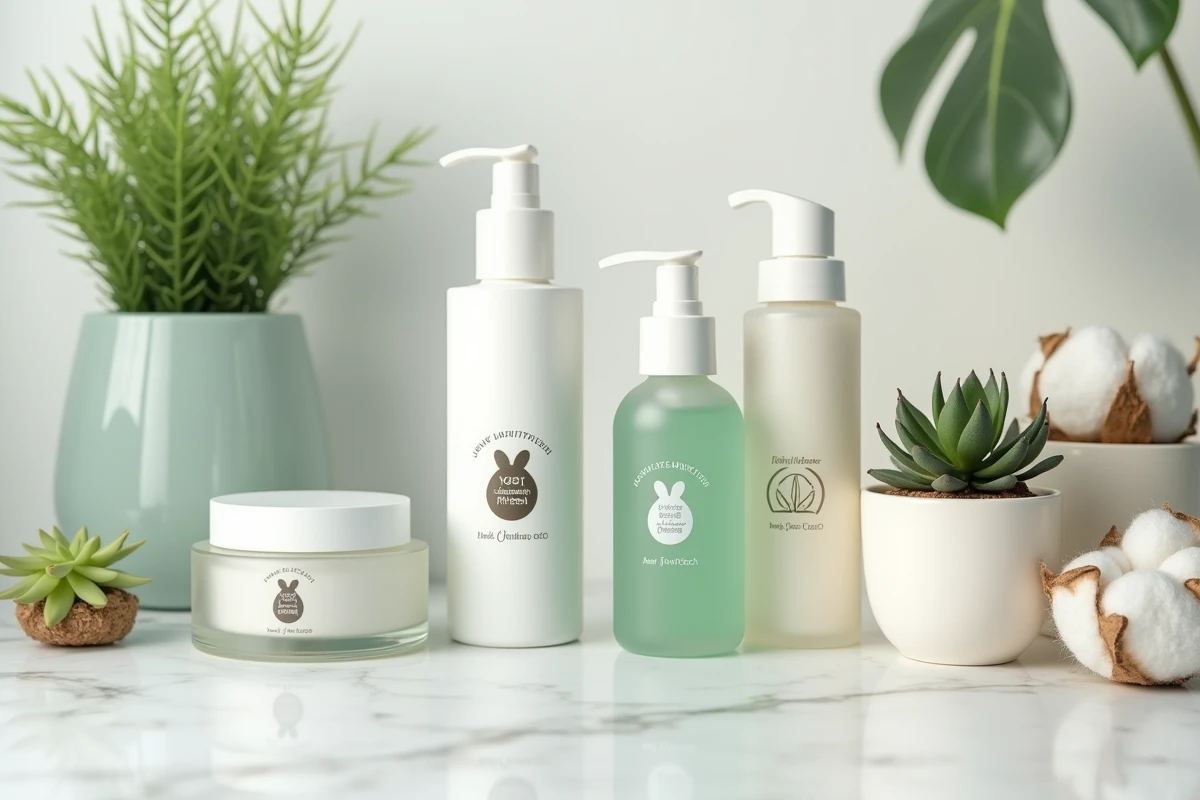
In 2025, Nocibé integrated third-party audits conducted by Leaping Bunny to validate its cruelty-free policy across all its suppliers. This approach goes beyond the minimal European standards, which do not require proactive verification by distributors.
Leaping Bunny, managed by the Coalition for Consumer Information on Cosmetics, mandates an audit of the supply chain, from raw materials to the finished product. The audit covers every link in the production chain, not just the final manufacturer. This is a notable difference compared to other labels that rely solely on a brand’s declaration of compliance.
The available data do not allow us to conclude that all products sold in Nocibé stores are covered by this audit. A multi-brand distributor offers hundreds of partner brands, and the pace of audit integration depends on the cooperation of each supplier.
Difference between Leaping Bunny and the PETA label
PETA manages the Beauty Without Bunnies program, which certifies brands based on a written commitment not to test on animals. In 2025, PETA tightened its criteria to account for the contradictions related to REACH. PETA’s new requirements target tests imposed by other regulations than the cosmetic regulation.
The two certifications do not completely overlap. Leaping Bunny emphasizes on-site audits of the supply chain, while PETA evaluates the brand’s overall commitment. A brand can hold one certification without the other.
Asian suppliers and Nocibé’s import policy
Since 2021, China has relaxed its animal testing requirements for non-specific imported cosmetics, such as everyday skincare. This development has opened the door to a more accessible cruelty-free certification for European brands wishing to sell in the Chinese market without imposing animal tests.
However, a trend towards stricter revision has been observed recently, complicating clarity for distributors. Nocibé maintains a more flexible policy towards Asian imports than some European competitors. Sephora, for example, chose to drop certain Chinese suppliers in 2024 to secure its cruelty-free claim.
This choice by Nocibé generates debates about the robustness of its positioning. A flexible policy can mean a broader catalog for consumers, but also an increased risk of gray areas regarding certain ingredients or finished products.
Animal-derived ingredients: cruelty-free does not mean vegan
Recent feedback from consumers highlights another issue often confused with the question of testing. Some Nocibé products contain animal-derived ingredients such as lanolin (from sheep wool) or keratin, without contradicting a cruelty-free certification.
A cruelty-free product guarantees the absence of animal testing, not the absence of animal ingredients. To obtain this double guarantee, one must look for products bearing a vegan label in addition. The Animal Rights Foundation reminds us that European law allows the use of these substances, and only private labels can distinguish between the two commitments.
If you are looking for cosmetics that are both non-tested and free from animal ingredients, here are the elements to check:
- The presence of a cruelty-free label (Leaping Bunny, PETA’s Beauty Without Bunnies) certifying the absence of testing throughout the supply chain
- The complementary presence of a vegan label (Vegan Society, EVE Vegan) guaranteeing the absence of lanolin, carmine, keratin, or any other animal-derived substance
- The product’s INCI list, the only reliable source to identify each ingredient, beyond marketing claims on the packaging
The growing preference for fully vegan alternatives is prompting several brands distributed by Nocibé to reformulate their products without animal derivatives. This trend is accelerating, but it remains uneven across ranges and categories of care.
Nocibé’s positioning on cruelty-free rests on a solid European regulatory foundation, reinforced by the recent integration of Leaping Bunny audits. The limitations stem from the contradiction between the cosmetic regulation and REACH, the management of Asian suppliers, and the ongoing confusion between cruelty-free and vegan. Checking labels and reading the INCI list remains the most reliable way to make an informed choice.