The Russian military armament has always been at the heart of the nation’s defensive and offensive strategy, reflecting its power on the international stage. In recent years, Moscow has intensified its armed forces modernization program by deploying cutting-edge technological innovations. From hypersonic systems to robotic combat platforms, as well as advancements in electronic warfare and cyber defense, Russia seeks to maintain and expand its geopolitical influence. These developments generate global interest, both for their strategic implications and for the possible repercussions on the balance of international forces.
Recent Advances in Russian Military Armament
Russia, aware of the need to renew its arsenal, spares no effort in establishing its technological supremacy in the military field. The ‘Army 2023’ Forum, organized by the Russian Ministry of Defense, is a perfect illustration: contracts worth over 433 billion rubles are expected to be concluded, marking a significant step in realizing the country’s military ambitions. This essential event in the Russian armament industry showcases the latest and most advanced weapon systems, ranging from combat aircraft to helicopters, as well as sophisticated defense devices.
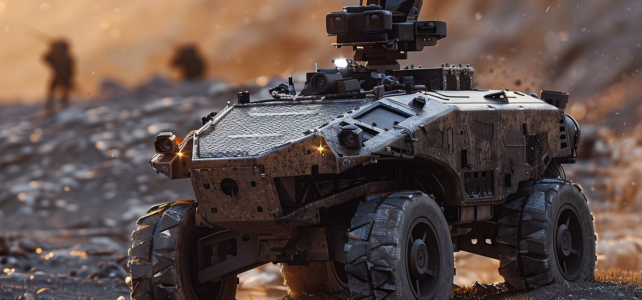
The rise of military robotics is also a strategic focus for Russia. The example of Igorek, a bipedal combat robot under development, demonstrates Russia’s commitment to integrating artificial intelligence and autonomous technologies into its armed forces. These new weapons, which are part of a continuous innovation approach, could redefine combat methods and set new standards in future conflicts.
The Russian armament industry is focusing on the development of hypersonic capabilities, a technology that would allow it to surpass current defense systems. The commissioning of missiles capable of flying at speeds exceeding Mach 5 would make Russian defense not only more unpredictable but also potentially invulnerable to traditional interception systems.
The electronic warfare sector is also making notable progress, with advancements in equipment capable of jamming, deceiving, or disabling enemy communications and command and control systems. These advancements enhance the effectiveness of Russian military operations and their ability to thwart enemy strategies while protecting their own communication networks.
The Impact of International Sanctions on Russian Military Technological Development
International sanctions, a direct consequence of the conflict in Ukraine, have imposed considerable economic pressure on Russia. The war in Ukraine has not only accelerated the instrumentalization of economic interdependencies but has also led to an unprecedented series of economic sanctions. The European Union, in particular, has imposed stringent measures affecting various sectors, including armament. These restrictions have a direct impact on the financial situation of Russian defense-related companies, which are already facing obsolescence of their production apparatus.
In this context, the Russian national currency has experienced a drastic devaluation, reaching historically low levels against the dollar. The sanctions specifically targeted the financial system, with the exclusion of certain Russian banks from the Swift network, a severe blow to the fluidity of international transactions. Russia has quickly sought to counterbalance this isolation by turning to CIPS, the Chinese alternative to Swift, thereby strengthening its ties with China, an increasingly influential strategic partner.
Europe, dependent on Russian gas, found itself in a delicate position, perfectly illustrating the complexity of economic interdependencies. The EU’s foreign affairs chief, Josep Borrell, had to admit that economic interdependence does not guarantee security. This realization has led to a reevaluation of defense and security policies within the EU, recognizing the need for greater strategic autonomy.
Despite the sanctions and financial challenges, the Russian central bank responded by raising its key interest rate from 8.5% to 12%, a measure aimed at stabilizing the national currency and containing inflation. Paradoxically, the International Monetary Fund (IMF) noted that European economies have withstood these upheavals better than anticipated, suggesting a resilience that could influence future economic and military strategies on the continent.