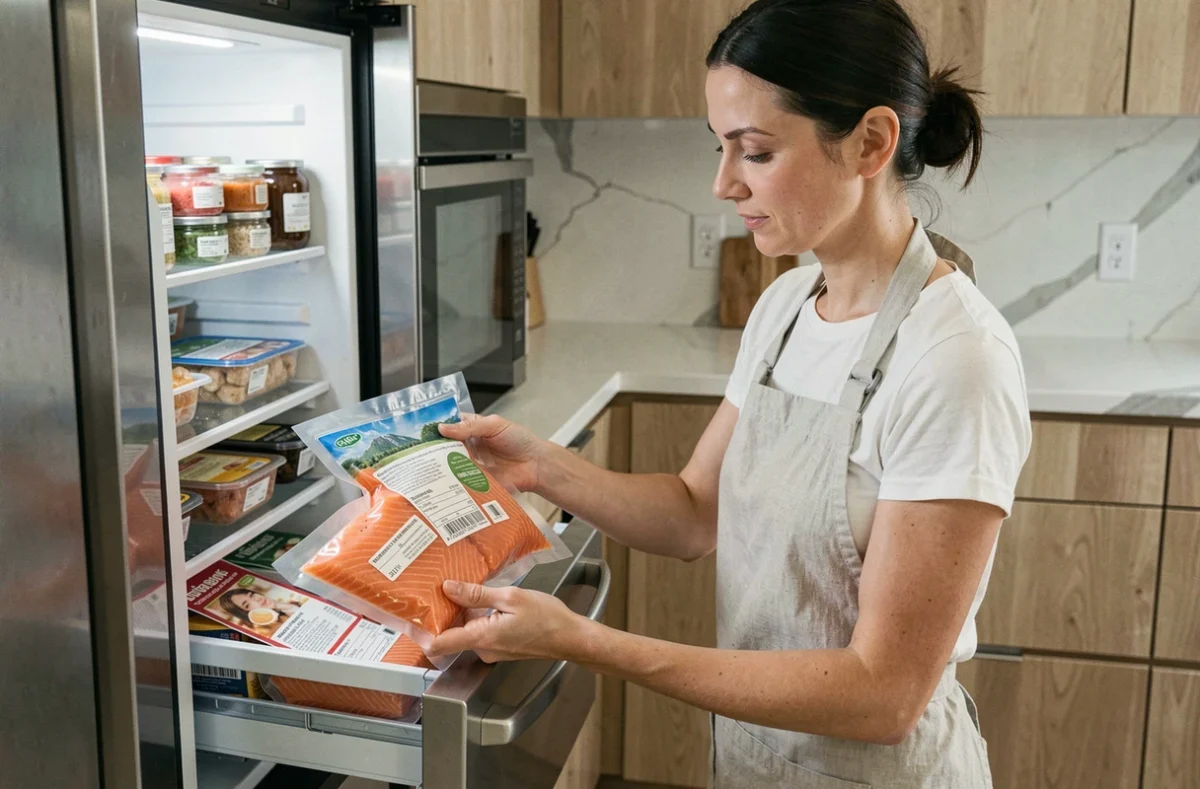
A vacuum-packed piece of beef comes out of the fridge looking perfect and smelling neutral. Nothing suggests a problem. That’s the catch: vacuum sealing removes oxygen, slowing the growth of common aerobic bacteria, but it creates an environment that favors other microorganisms, including anaerobic bacteria such as Clostridium botulinum.
So vacuum food storage is not simply a matter of extending shelf life. It requires knowing the precise limits for each type of product and storage temperature.
Anaerobic bacteria and vacuum sealing: the risk the charts don’t show
Most online guides present vacuum storage times in charts without mentioning what actually happens inside the bag. Anses points out that vacuum sealing is not a sterilization method. Removing oxygen inhibits the growth of some bacteria, but gives those that thrive without air free rein.
Clostridium botulinum is the most dangerous example. Its spores resist heat and can produce a toxin even in food that looks perfectly safe. Normal appearance or smell does not guarantee that a vacuum-packed product is safe.
Managing the risk relies on several safeguards used together: strict refrigeration, salt, preservatives, drying, and smoking. This is why the vacuum storage times for food are organized not only by category (meat, fish, vegetables), but also by the process used before packaging. Vacuum-packed smoked salmon does not keep as long as vacuum-packed raw salmon, even in the refrigerator.
Vacuum packaging never makes up for a break in the cold chain. If a product has been above its recommended storage temperature for more than two hours, vacuum sealing it afterward does not “reset the clock.”
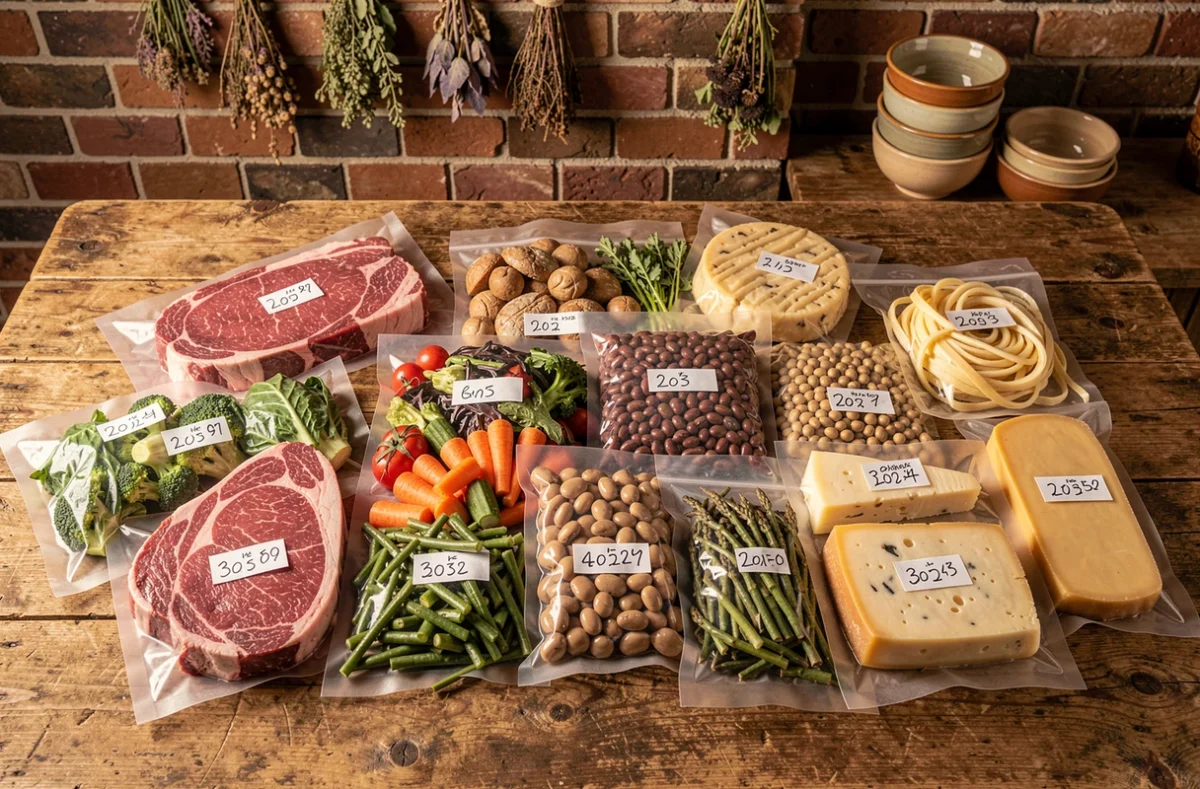
Vacuum storage in the refrigerator: times by food type
This is the most common storage method in home kitchens. It assumes a refrigerator set between 0 and 3 °C. Above 5 °C, the times below no longer apply.
Vacuum-packed meat and poultry in the fridge
A large cut of vacuum-packed beef generally keeps for eight to ten days in the refrigerator. Chicken and turkey keep for six to nine days. Vacuum-packed ground meat is the most perishable, with a storage time limited to four or five days: the surface exposed to air during grinding increases the initial contamination.
Fish and seafood
Lean fish (cod, whiting) keeps for seven to eight days when vacuum-packed and refrigerated. Fatty fish (salmon, mackerel) keeps for four to six days, as fats oxidize more quickly despite the absence of air. Shrimp and shellfish keep for four to five days.
Blanched vegetables and fruit
Vegetables must be blanched before vacuum sealing. Without blanching, fermentation can begin inside the bag. Washed and dried lettuce can keep for eight to ten days when vacuum-packed and refrigerated, but it cannot be frozen in this form.
For fruit, storage time varies depending on acidity and water content. Berries (strawberries, raspberries) keep for less time than firmer fruit.
Vacuum sealing and freezing: how storage times change
Combining vacuum sealing with freezing at -18 °C adds two layers of protection. Freezing stops bacterial activity, while vacuum sealing prevents freezer burn (the grayish, dried-out patches that appear on improperly packaged food).
Here are some practical guidelines:
- Large cuts of beef, chicken, turkey, and pork keep for fifteen to twenty months in the freezer when vacuum-packed, compared with four to six months in standard packaging
- Vacuum-packed ground meat keeps for around twelve months in the freezer
- Vacuum-packed fish (lean or fatty) and shellfish keep for ten to twelve months in the freezer
- Vacuum-packed cooked meals generally keep for ten to twelve months at -18 °C
Vacuum sealing can extend freezer storage times by three to five times compared with standard packaging. This is where the benefit is greatest and the bacterial risk lowest, since no bacteria grow at -18 °C.
Vacuum storage at room temperature: strict conditions to follow
This is the riskiest situation. Storing vacuum-packed food at room temperature (20-25 °C) without prior sterilization creates an environment favorable to Clostridium botulinum. Without sterilization, vacuum sealing alone is not enough for storage outside the refrigerator.
The only foods that can be stored vacuum-packed at room temperature without sterilization are those whose recipe or processing provides its own safeguards:
- Dry products (coffee, grains, legumes) with a water activity too low to support bacterial growth
- Heavily salted or smoked foods, where salt and smoking act as natural preservatives
- Acidic products (pH below 4.6), in which Clostridium botulinum cannot produce toxin
For everything else (meat, fish, vegetables, cooked meals), vacuum storage at room temperature requires heat sterilization in an autoclave. Anses recommends discarding any vacuum-packed product with swollen or misshapen packaging, or a suspicious smell when opened.
Vacuum-packed cooked food: storage time depends on the process
A cooked meal that is then vacuum-packed and refrigerated generally keeps for six to ten days. Storage time varies depending on the temperature reached at the center of the food during cooking and how quickly it is cooled. Slow cooling (more than two hours between 63 °C and 10 °C) exposes the food to bacterial growth before it is even vacuum-packed.
Depending on the type, cheese keeps for four to eight weeks when vacuum-packed and refrigerated. Hard cheeses tolerate this packaging better than soft cheeses, whose texture and microbial cultures change more quickly in an anaerobic environment.
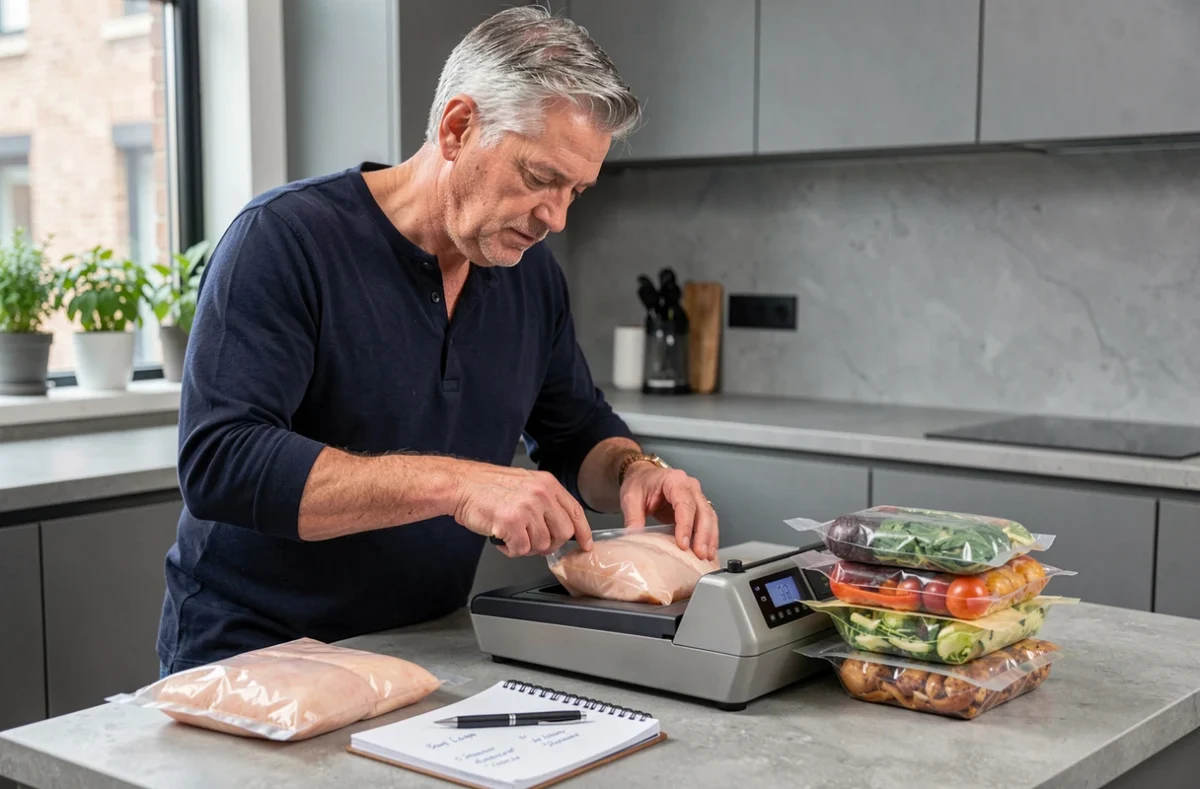
The type of machine used also affects storage time. A professional chamber vacuum sealer removes more air than a home external suction sealer. The less residual oxygen left in the bag, the longer the food keeps—but the more seriously the anaerobic risk must be taken.
Vacuum sealing remains a powerful tool for reducing food waste and keeping products fresh for longer. Just remember that a sealed bag is no substitute for the cold chain, sterilization, or common sense when you’re unsure how food has been stored.