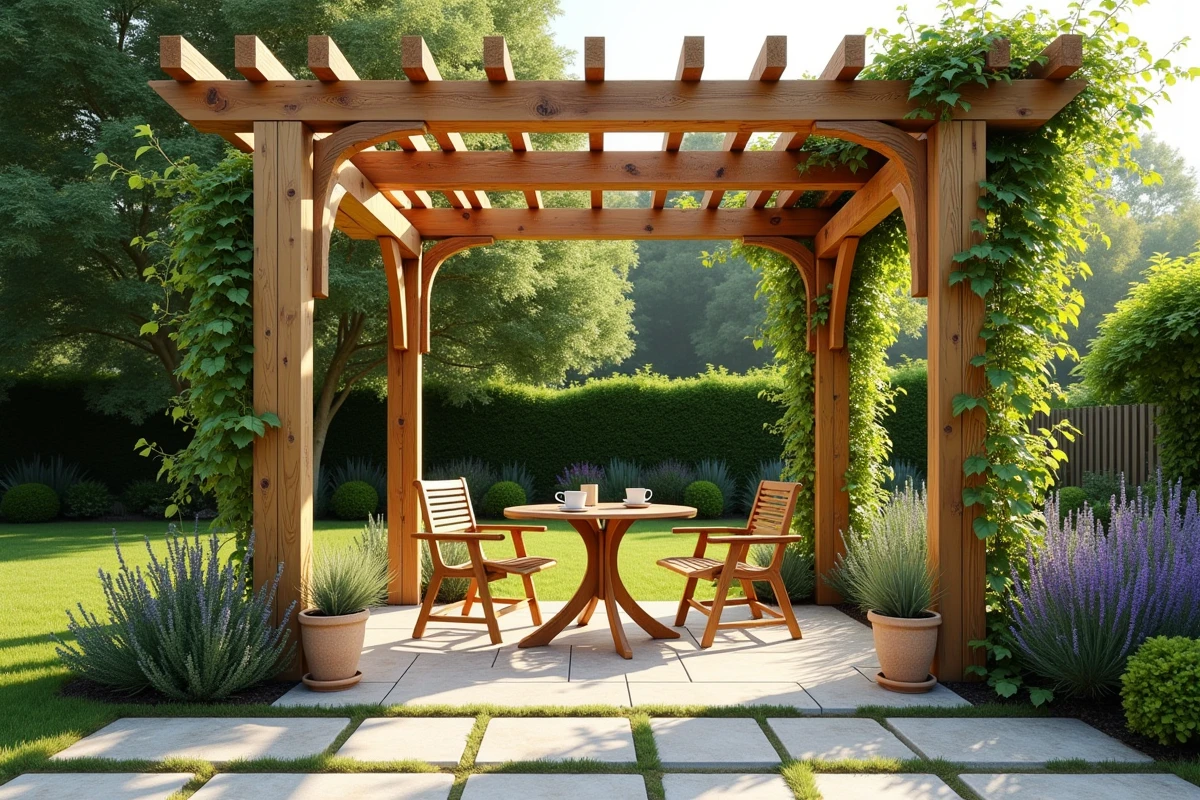
A wooden pergola sold in a DIY superstore does not offer the same guarantees as a custom-made structure. The kits offered at Brico Dépôt meet specific specifications, with post sections, beam thicknesses, and treatment classes that determine the actual durability of the whole.
Before finalizing a model, we recommend checking three often-overlooked technical parameters: wind resistance, the flatness of delivered elements, and the type of anchoring provided.
Wind resistance and anchoring: the weak point of kit wooden pergolas
The storms of winter 2023-2024 highlighted a concrete problem: lightweight pergolas, including wooden ones, can lift or deform under gusts. Technical guidelines now recommend systematically checking the wind resistance claimed by the manufacturer before purchase.
On a Brico Dépôt kit, the wind rating is not always displayed in-store. We observe that most budget models are delivered with standard plates and versatile dowels, without distinction based on the substrate (concrete slab, soil, wooden deck). This generic anchoring kit is insufficient in exposed areas.
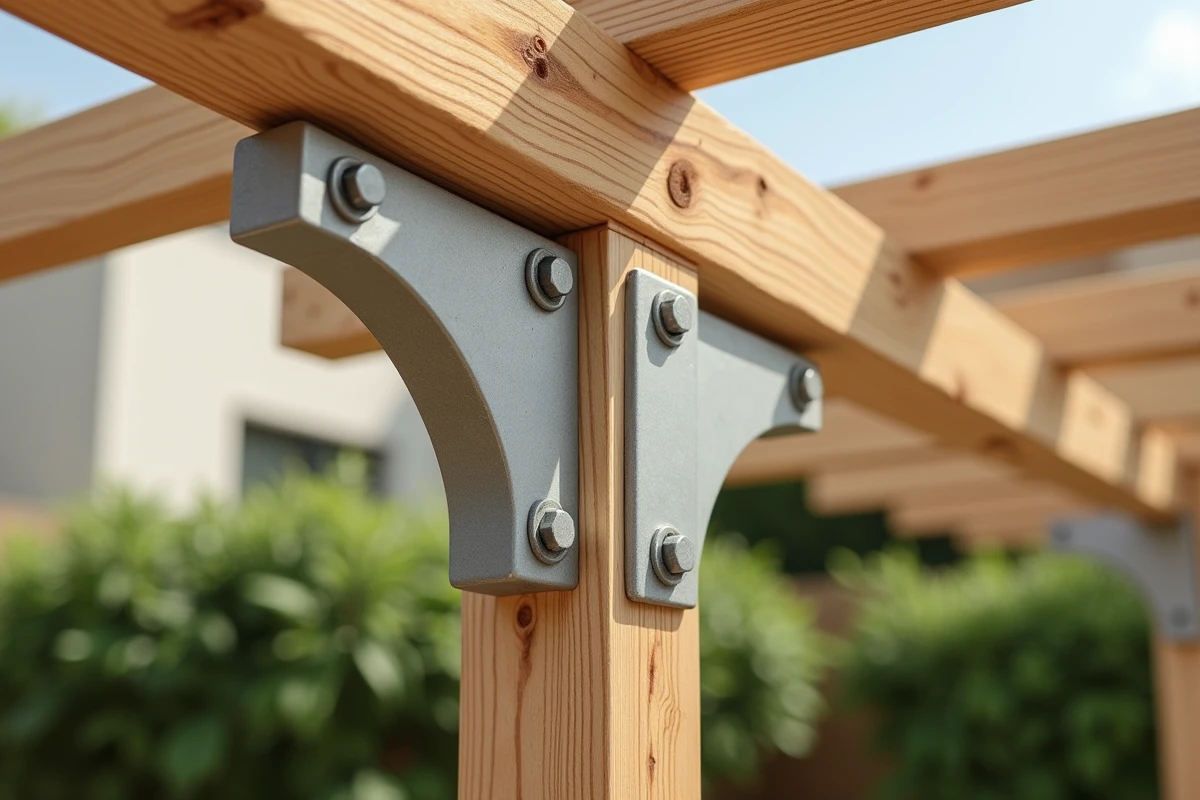
To secure the installation, it is necessary to adapt the fixings to the actual substrate. On a concrete slab, chemical dowels of appropriate diameter for the plates provide significantly better hold than the mechanical dowels supplied. On soft ground, stakes to drive in or seal in concrete blocks remain the only reliable option. When looking to choose a wooden pergola from Brico Dépôt, this anchoring issue should take precedence over any aesthetic considerations.
Flatness and squareness: check the kit before assembly
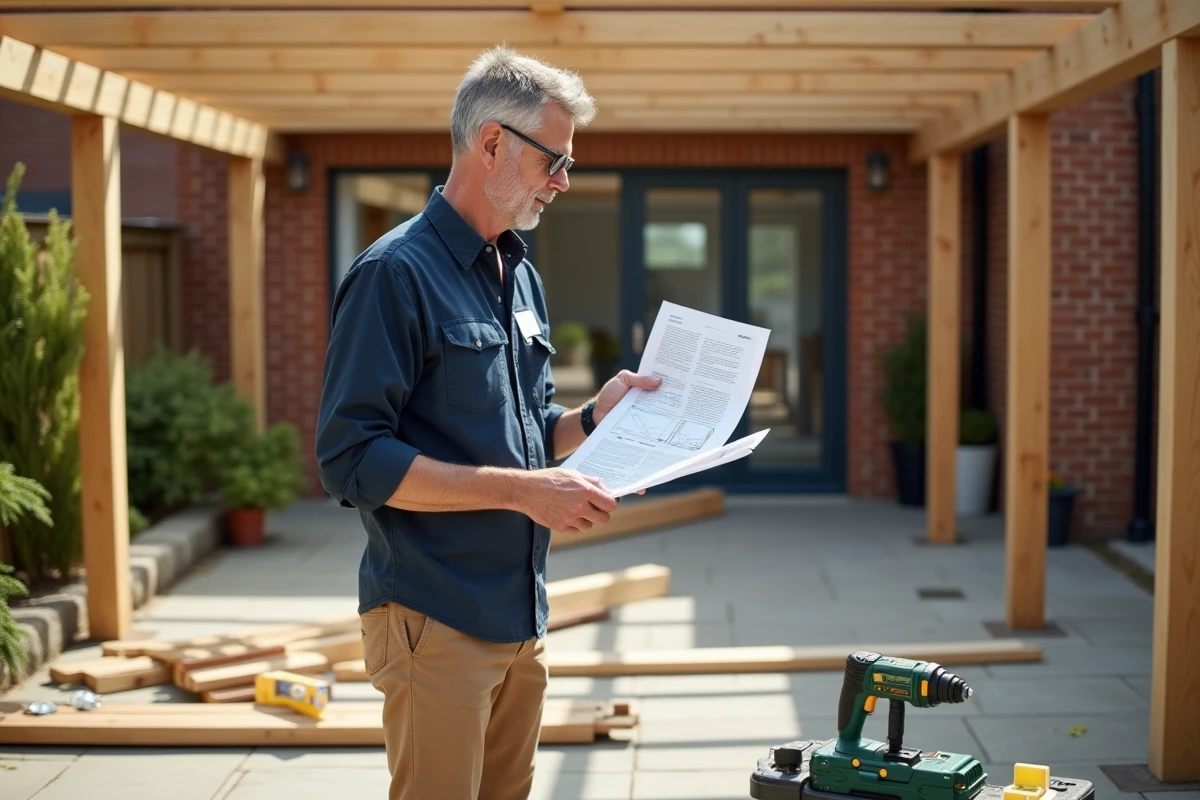
Feedback from craftsmen and DIY enthusiasts on specialized forums in 2024-2025 reports a recurring difficulty with flatness and squareness on certain budget wooden pergolas from large DIY stores. The wood delivered in bulk may show warping, twisting, or irregular sections that complicate assembly and compromise final stability.
We recommend checking each piece upon receipt, before starting assembly. A simple chalk line and a carpenter’s square are enough to spot a twisted post or a bowed beam. Returning a defective piece at this stage costs time but avoids having to redo the entire structure once assembled.
Control points upon opening the kit
- Check the straightness of each post by laying it flat on a level surface: a gap visible to the naked eye indicates problematic warping
- Measure the diagonals of the frame once the beams are positioned on the ground, before final tightening, to ensure squareness
- Ensure that the drill holes match the spacings indicated in the instructions, as a shift of a few millimeters forces the joints and weakens the bolts
Wood treatment class: what the label really means
The wood usage class determines its lifespan outdoors. On Brico Dépôt wooden pergolas, treated autoclave pine is mainly found, often labeled as class 3 or class 4. The difference between these two classes is not trivial.
A wood class 3 resists temporary moisture but not prolonged contact with standing water. It is suitable for a wall-mounted pergola protected by an eave. Class 4 wood can withstand permanent contact with water or soil, making it suitable for freestanding pergolas exposed to the elements without protection.
The class 3 autoclave treatment remains the standard for entry-level kits. We recommend applying a saturator or stain from the first year to compensate for the limitations of this treatment. Without regular maintenance, the green hue of the autoclave treatment turns gray within a few months, and the fibers begin to lift.
Maintenance to plan according to the species and treatment
- Class 3 autoclave pine: apply a saturator every twelve to eighteen months, graying if necessary before each new coat
- Class 4 autoclave pine: less frequent maintenance, but an annual low-pressure cleaning is advisable to prevent moss growth
- Glued laminated wood (some high-end models): longer lifespan due to structural bonding, similar maintenance but reduced frequency
Prior declaration of works: the threshold not to ignore
Even a kit pergola attached to the house may require a prior declaration of works. Since the gradual digitization of urban planning procedures (launched in 2022), several municipalities process applications online with shorter response times.
The triggering threshold depends on the local urban planning scheme of the municipality, but in practice, creating a surface exceeding a few square meters requires a procedure. A pergola measuring three meters by four exceeds this threshold in almost all municipalities. Failing to declare exposes one to forced compliance, or even a requirement to dismantle.
The prior declaration form is available online on the public services website. A site plan, a mass plan, and a representation of the external appearance must be provided. For a standard wooden pergola, the procedure remains quick.
The choice of a wooden pergola from a DIY superstore ultimately hinges on technical details that the price tag does not reveal. Reinforced anchoring, rigorous wood checks upon receipt, and scheduled maintenance from the first season make the difference between a structure that lasts ten years and one that warps after two winters.