Home help, teleassistance, meal delivery, housing adaptations: services dedicated to seniors now cover a wide range. However, not all meet the same needs, and their accessibility varies depending on the level of autonomy, place of residence, and financial resources of the beneficiary. Comparing these services by category allows us to identify those that truly simplify daily life and those that remain underutilized due to a lack of clear guidance.
Comparison of Main Home Services for Seniors
Families and the elderly themselves face a fragmented offering. Human assistance, technological devices, housing adaptations: each category addresses a specific need. The table below summarizes the most common services, their function, and their main funding method.
| Service | Main Function | Common Funding | Target Audience |
|---|---|---|---|
| Home Help (SAAD) | Housekeeping, shopping, personal care, meals | APA, pension funds | Seniors with loss of autonomy |
| Teleassistance | Alert in case of fall or discomfort | Tax credit, APA | People living alone |
| Meal Delivery | Delivery of balanced meals | Departmental social aid | Isolated or mobility-impaired seniors |
| Housing Adaptation | Fall prevention (shower, stairlift) | MaPrimeAdapt’, APA | Older homeowners or tenants |
| Comparators and Aggregators | Guidance, connections, quotes | Free for the user | Caregivers and seniors in search |
What stands out from this grid: the APA remains the dominant funding lever for most services related to loss of autonomy. In contrast, preventive measures (adaptation, teleassistance) often mobilize complementary funding that is frequently unknown.
To explore these different categories and identify resources suitable for each situation, you can access the Magazine Seniors website, which brings together several thematic sections.

Aggregators and Comparators of Senior Services: A Turning Point in Guidance
The ecosystem of services for seniors is no longer limited to general advice articles. Platforms like Silver Alliance or Bonjour Senior select, compare, and sometimes label offers. This trend reflects a shift from simple informational content to a supported purchasing model.
Guidance towards the right public contact remains the main obstacle for families. France services and public autonomy aid portals have enriched their guidance pathways, but the clarity of the systems remains uneven from one department to another.
What These Platforms Concretely Provide
- A sorting by need (safety, mobility, nutrition, social connection) rather than by type of provider, which simplifies the search for a pressed caregiver
- Grouped quote requests to compare home help or teleassistance rates in the same area
- Highlighting labels or quality criteria, useful when the local market offers several dozen structures
Conversely, these aggregators do not replace the medico-social assessment conducted by departmental teams for the allocation of the APA. They intervene upstream or as a complement, never as a substitute.
Fall Prevention and Housing Security: The Growing Segment
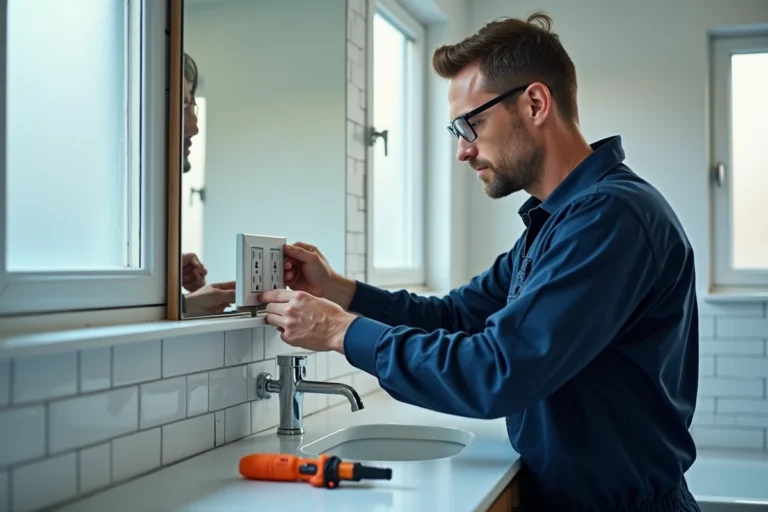
Recent content on the home care of elderly people increasingly emphasizes prevention rather than compensation. Adapting the housing before an accident occurs is cheaper and better preserves autonomy than intervening after hospitalization.
The bathroom and stairs concentrate the majority of fall risks among seniors. Replacing a bathtub with a walk-in shower, installing grab bars, or a stairlift are among the most frequent interventions.
Funding for Housing Adaptation
MaPrimeAdapt’ has become the reference mechanism for funding these works. It targets owner-occupants and certain tenants, subject to income and age conditions. The amount of coverage varies according to the household income, making prior simulation essential.
Complementary pension funds sometimes offer additional aid for preventive works. These aids remain underutilized, often because potential beneficiaries are unaware of their existence or do not know whom to address the request to.
Personalized Autonomy Allowance and ASPA: Two Schemes Not to Be Confused
The APA (personalized autonomy allowance) and ASPA (solidarity allowance for the elderly) are often cited together, but they respond to distinct logics.
The APA finances support plans related to dependency: hours of home help, teleassistance, supplies. It is granted without income conditions, although the amount remaining to be paid by the beneficiary depends on their income. The APA covers both home care and institutional accommodation.
ASPA, on the other hand, is a minimum pension intended for elderly people with low resources. It is not linked to loss of autonomy. An autonomous senior with modest income can receive ASPA without being entitled to APA, and vice versa.
Confusing these two allowances leads to misdirected procedures. Local information points (CLIC, departmental autonomy houses) remain the best first contact to identify the right scheme according to the situation.
The access pathway to aid remains the main barrier to their effective use. Before seeking which service to choose, the first step is to identify the right counter. Comparison platforms help map the offering, but it is the departmental medico-social assessment that triggers the most structuring funding. Knowing whom to contact is already simplifying half of daily life.