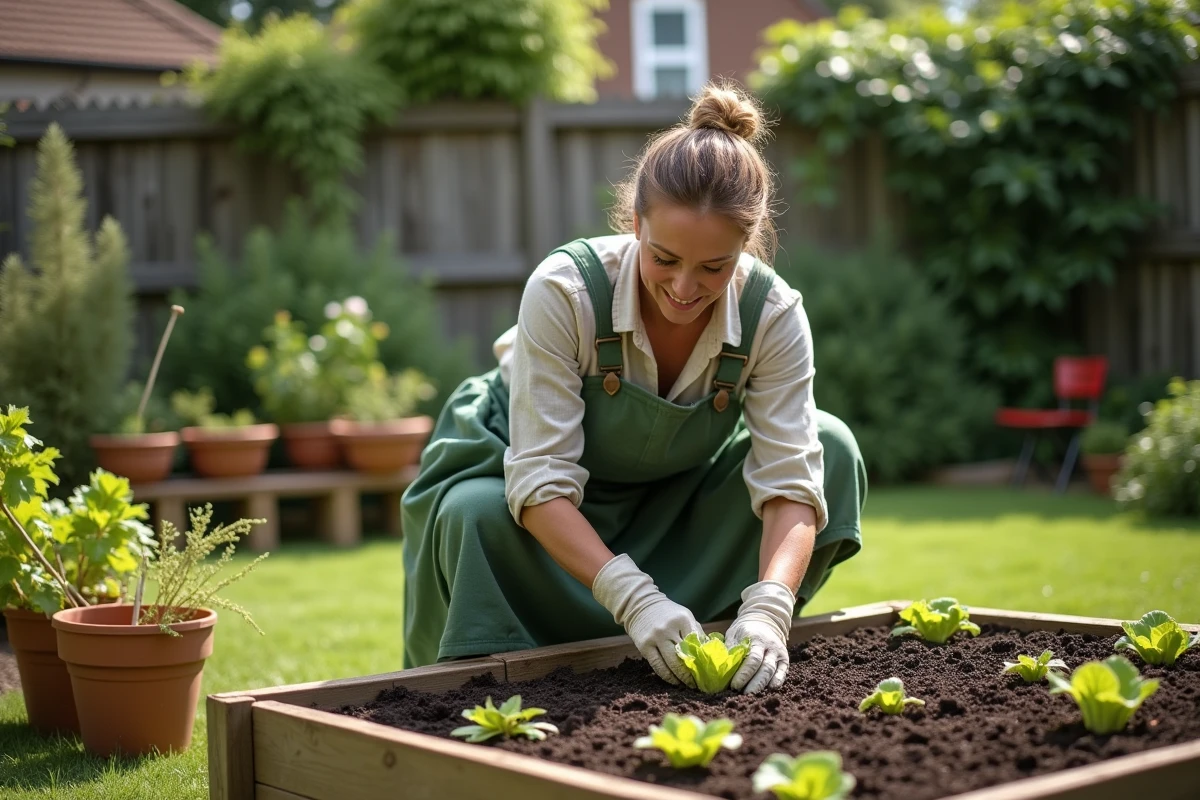
Salad is a short-cycle vegetable: from sowing to the first harvest, some varieties only need a few weeks. Further accelerating this cycle relies on three concrete levers: variety selection, soil microclimate management, and harvesting method. Each lever acts at a different stage of growth, and combining them saves real time in the garden.
Soil Microclimate: Forcing Cover and Mulching to Speed Up Germination
The soil temperature determines the speed of germination. A lettuce seed in cool soil can take more than a week to sprout, while warmed soil reduces this time noticeably.
The forcing cover (or lightweight winter cover) placed directly over the sowing creates a greenhouse effect close to the ground. It retains daytime heat, limits evaporation, and protects seedlings from the wind. In early spring or autumn, this protection shortens both germination and recovery after transplanting.
The mini-tunnel works on the same principle, with a larger volume of trapped air. It is better suited for wide sowing beds. In both cases, the protection is removed as soon as the plants reach a few centimeters or when outdoor temperatures rise sufficiently.
Fine mulching (dry grass, crushed straw) complements the setup by maintaining a constant moisture level around the roots. A surface-drying soil forces the plant to expend energy searching for water rather than producing leaves. Keeping the soil cool without excess water is one of the most underestimated factors in the growth speed of salads.
To delve deeper into this topic, Com 2 Net’s tips detail several complementary techniques suitable for amateur gardening.
Cutting Lettuce and Arugula: The Fastest Salad Varieties
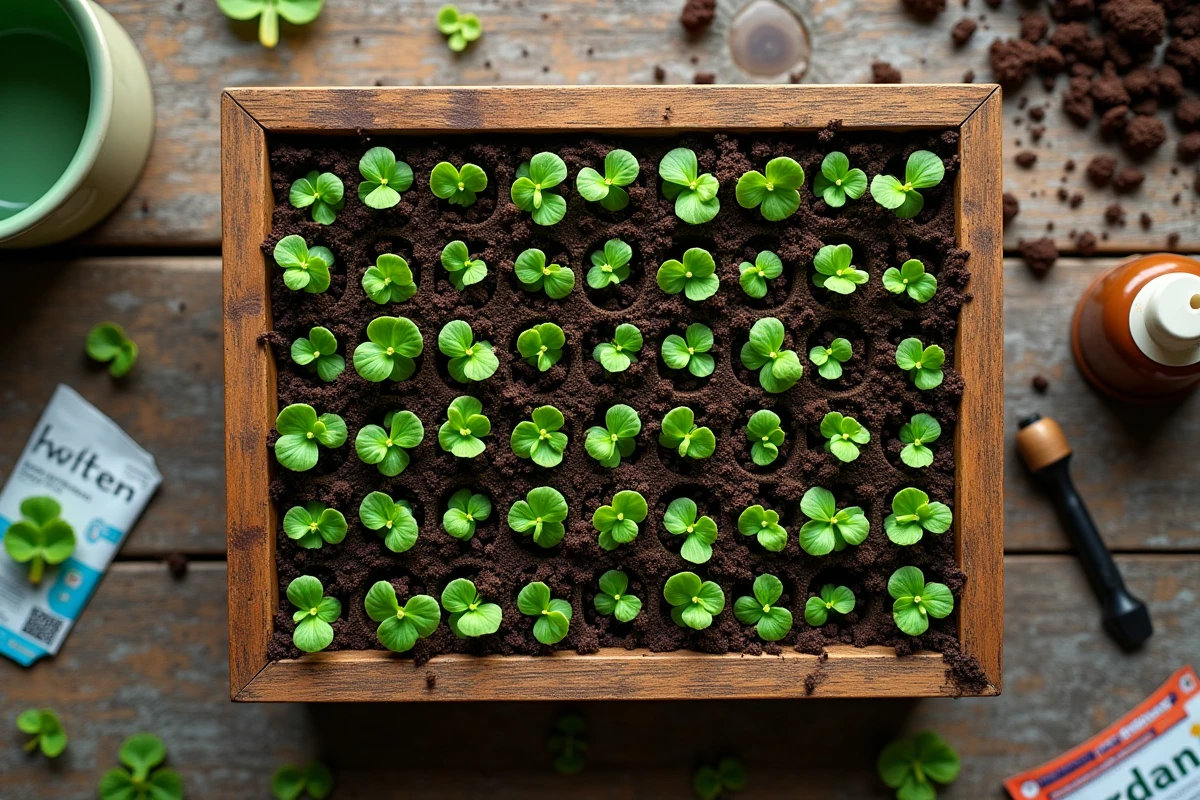
Not all salads grow at the same speed. Head lettuces, for example, require the plant to form a compact head before being harvested. This process lengthens the cycle by several weeks compared to so-called “cutting” varieties.
Cutting lettuces produce harvestable leaves well before the formation of a head. The outer leaves are cut as soon as they reach a sufficient size, without uprooting the plant. The plant continues to grow from the heart, allowing for multiple successive harvests from the same sowing.
Arugula follows the same logic, with an even shorter cycle. Lamb’s lettuce, although a bit slower, remains a quick option for autumn and winter sowings. Among lesser-known varieties, Cuban claytonia also offers rapid growth and tolerates cool temperatures.
- Cutting lettuce: first harvest possible a few weeks after sowing, multiple cuts per plant.
- Arugula: very short cycle, suitable for staggered sowings from spring to autumn.
- Lamb’s lettuce: ideal for late summer and autumn sowings, grows well in cool weather.
- Cuban claytonia: tolerates cold, rapid growth, fleshy leaves.
Focusing on these varieties rather than on chicories or classic head lettuces significantly shortens the time between sowing and the plate.
Leaf-by-Leaf Harvesting: Producing Longer from the Same Plant
The harvesting method has a direct impact on the productivity of the garden. Uprooting a whole plant at maturity yields a single harvest. Cutting the outer leaves while leaving the heart intact restarts production and extends the lifespan of each lettuce plant.
This method, sometimes referred to as “cut and come again” in seed catalogs, works particularly well with cutting lettuces and arugula. A few leaves are taken from each plant at intervals of a few days, stimulating regrowth.
Cutting Frequency and Height
A cut that is too close exhausts the plant. Leaving at least two or three centimeters above the collar ensures rapid regrowth. During hot weather, it is better to harvest in the morning when the leaves are full of water and the plant is not stressed.
Water stress slows regrowth and accelerates bolting. Regular watering, preferably at the base rather than by spraying, keeps the soil cool without promoting foliar diseases. Constantly moist soil (without being waterlogged) is the best ally for continuous harvesting.
Staggered Sowing in the Garden: Salads All Year Round
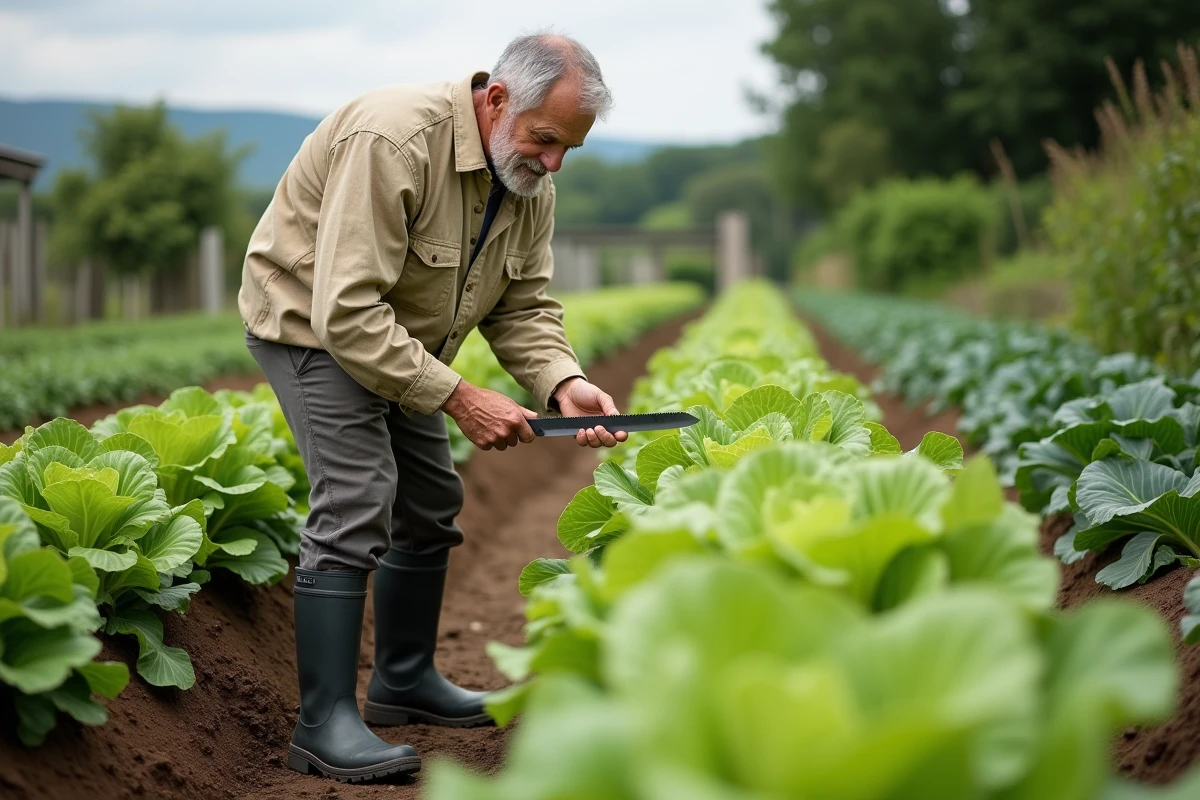
Sowing all your salads at once produces a peak harvest followed by a production gap. Staggering sowings every two to three weeks ensures a steady supply from spring to autumn.
In spring, cutting lettuces and arugula take over from the last winter lamb’s lettuce. In summer, favoring heat-resistant varieties avoids premature bolting that makes the leaves bitter. From the end of summer, lamb’s lettuce and chicories can be resown to extend the season until the first frosts.
- Spring: sow cutting lettuces and arugula as soon as the soil warms up.
- Summer: choose heat-tolerant varieties, water regularly, mulch the soil.
- Autumn and winter: lamb’s lettuce, chicories, Cuban claytonia under forcing cover.
Combining with a protective cover at the beginning and end of the season extends the growing window by several weeks in both directions. A well-organized garden can thus provide fresh leaves for nearly the entire year, even in temperate climate regions.
The growth speed of a salad depends less on a gardening secret than on a combination of good practices: suitable variety, maintained cool soil, thermal protection at the right time, and progressive harvesting. Every week saved in the cycle translates into faster rotation and more harvests from the same garden area.